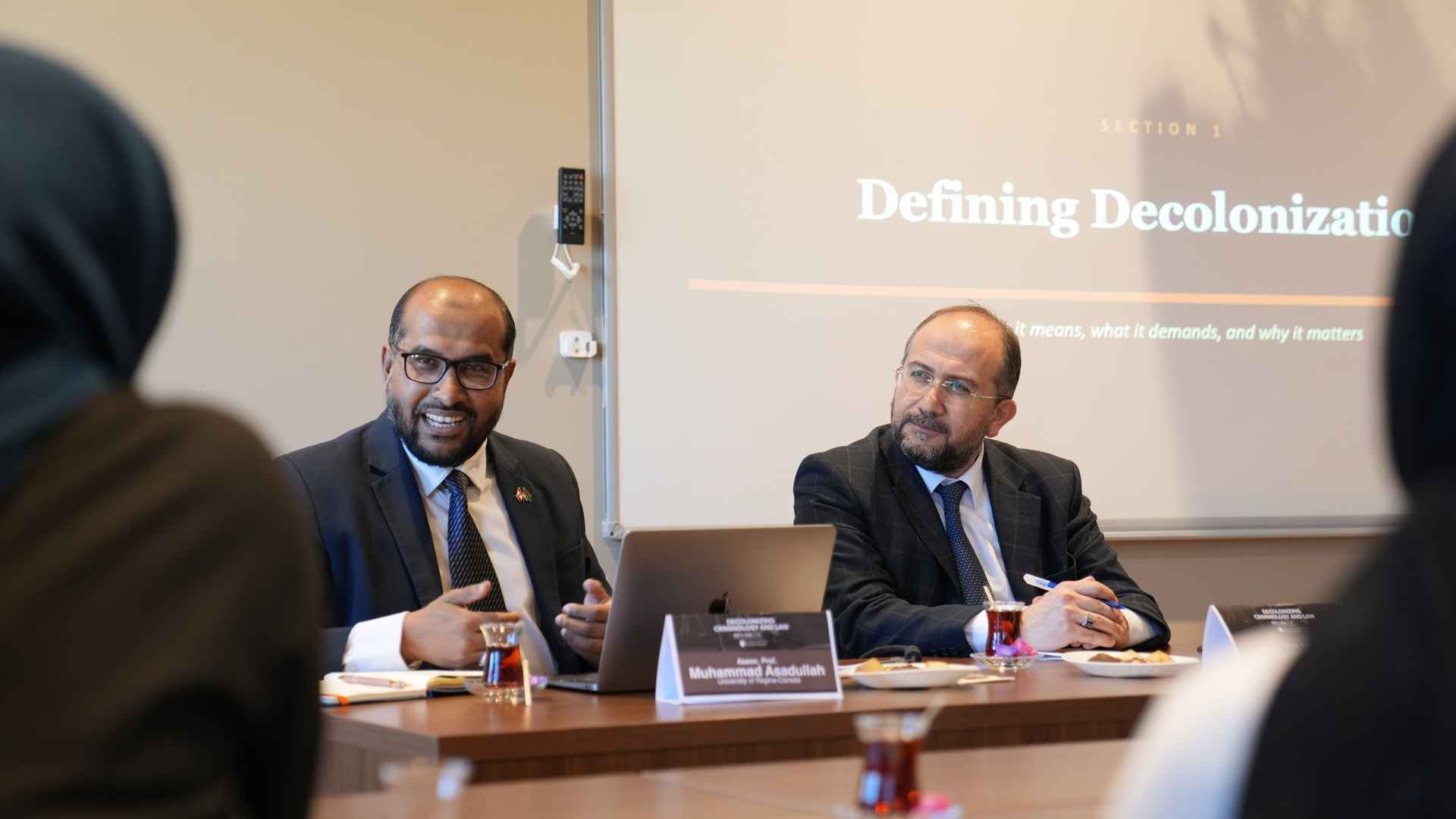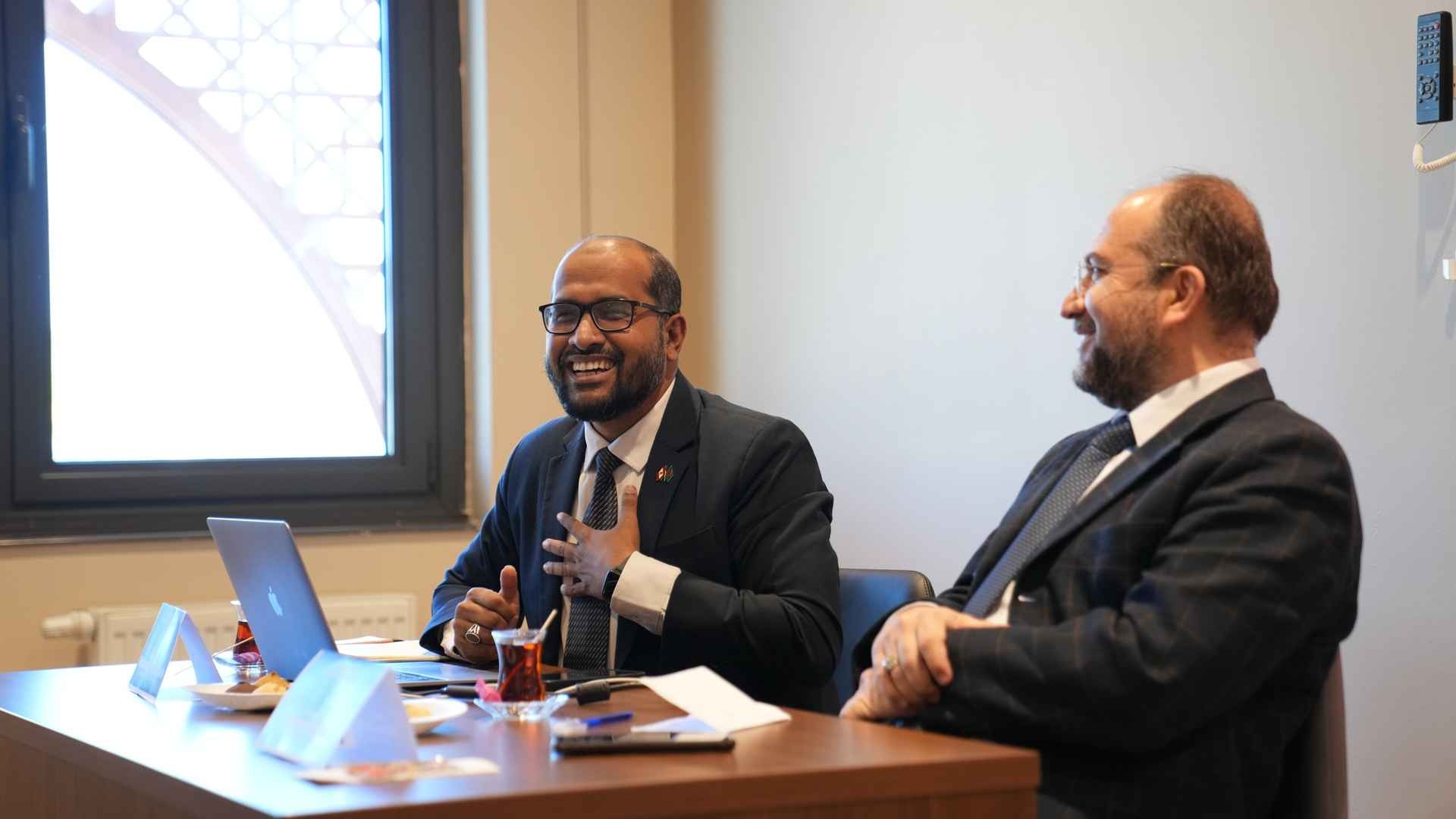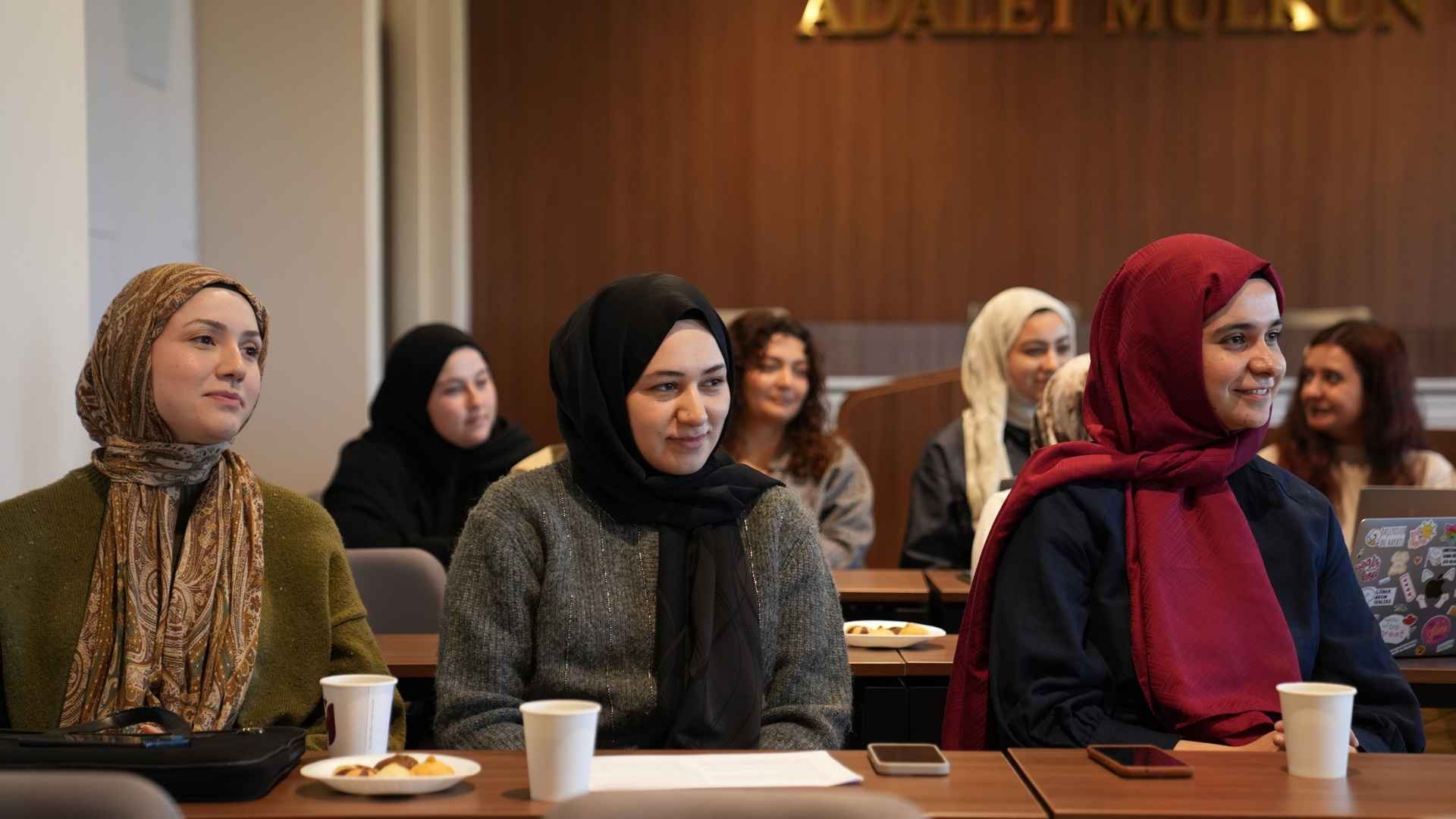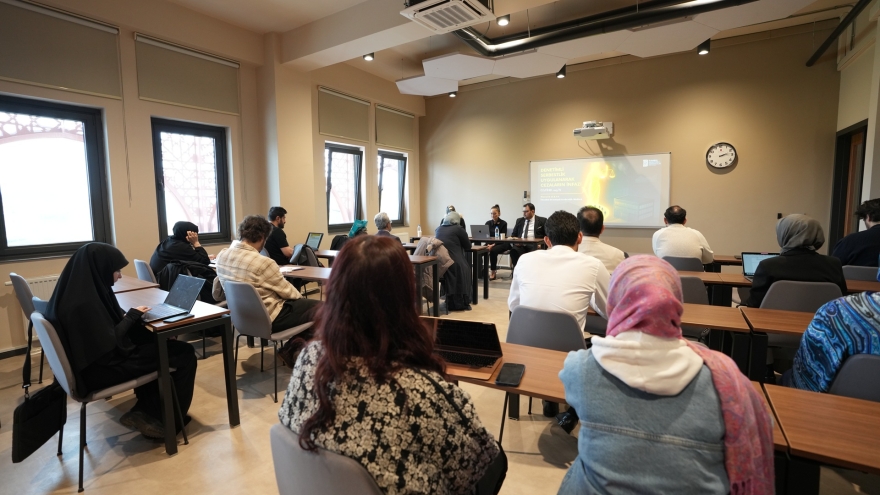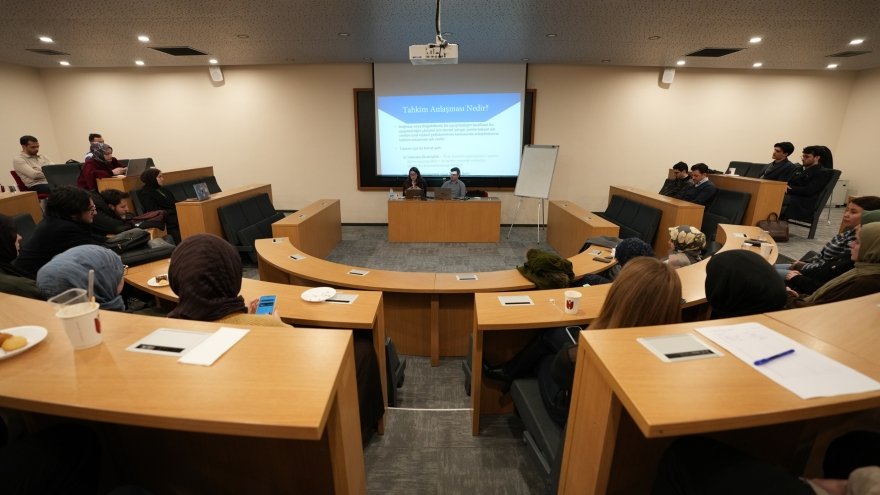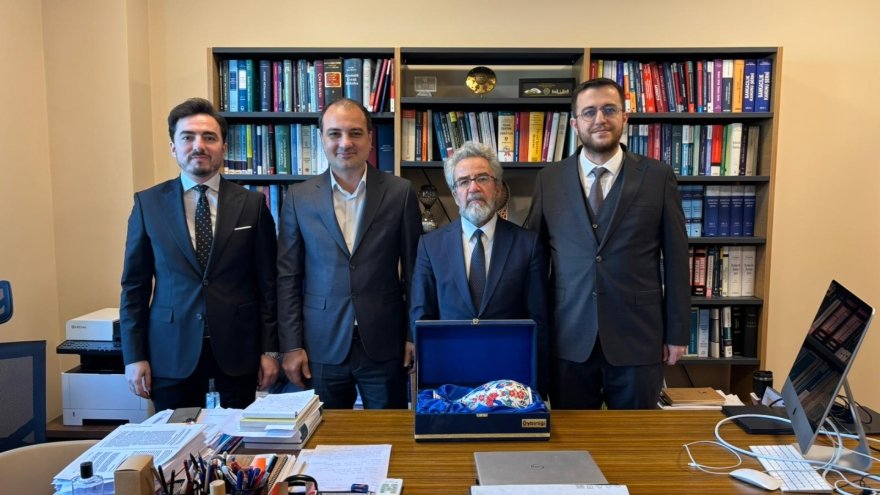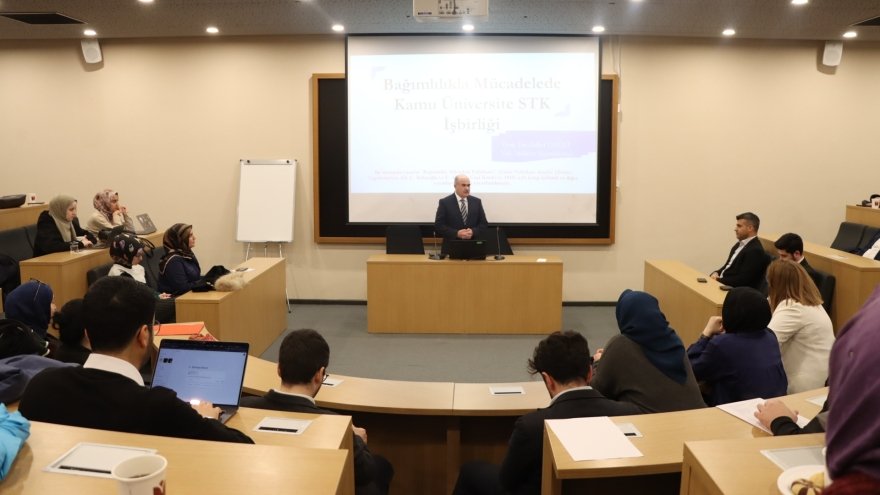
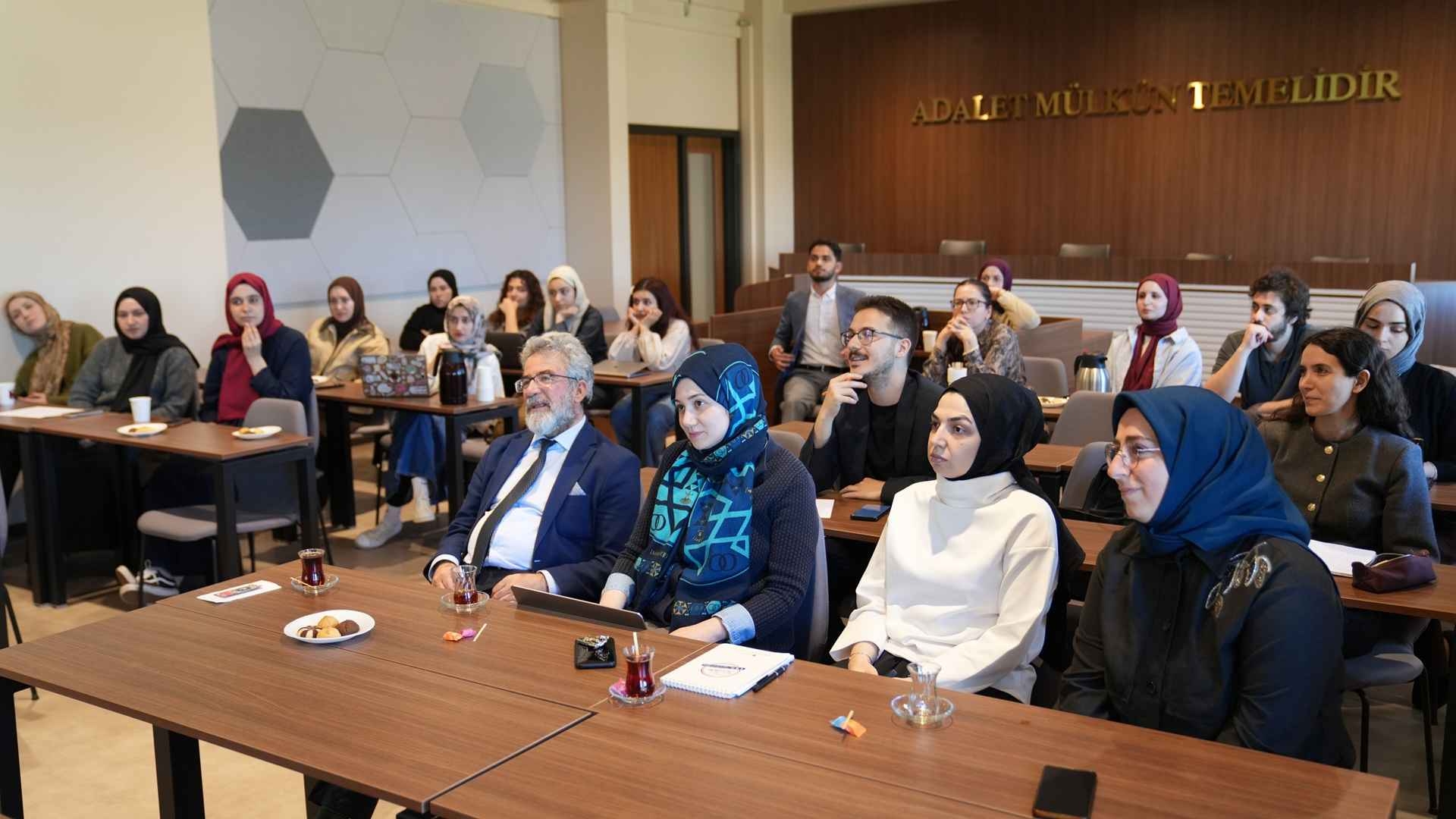
As part of the academic events organized by the Faculty of Law, a conference titled “Decolonizing Criminology and Law” was held on May 15, in the Faculty of Law Courtroom.
The conference aimed to question Western-centered paradigms in the fields of criminology and law and to discuss alternative approaches. During the event, the historical background of Western-centered understandings of criminology and law, as well as their impact on justice systems in different regions, were examined from a decolonial perspective. The conference was moderated by Associate Professor Mehmet Maden, faculty member at Istanbul University Faculty of Law, and featured Associate Professor Muhammad Asadullah from the Department of Criminology at the University of Regina, Canada, as the keynote speaker.
Associate Professor Muhammad Asadullah emphasized that criminology emerged as a discipline in Europe during the colonial era and that the concept of “crime” was constructed upon Western-centered racial and moral values. He stated that criminal law traditions, court structures, and policing institutions that continue to carry this colonial legacy still function as instruments of structural oppression, particularly in formerly colonized societies across Asia, Africa, and Latin America.
Asadullah further noted that decolonization is not merely a curricular debate, but rather represents a profound demand for transformation extending from systems of knowledge to legal traditions. He highlighted that alternative approaches such as critical criminology, indigenous justice traditions, and legal pluralism offer concrete and practical pathways for such transformation.
The event concluded with a question-and-answer session following the presentation, during which participants had the opportunity to ask questions and engage in discussion.